


Introduction
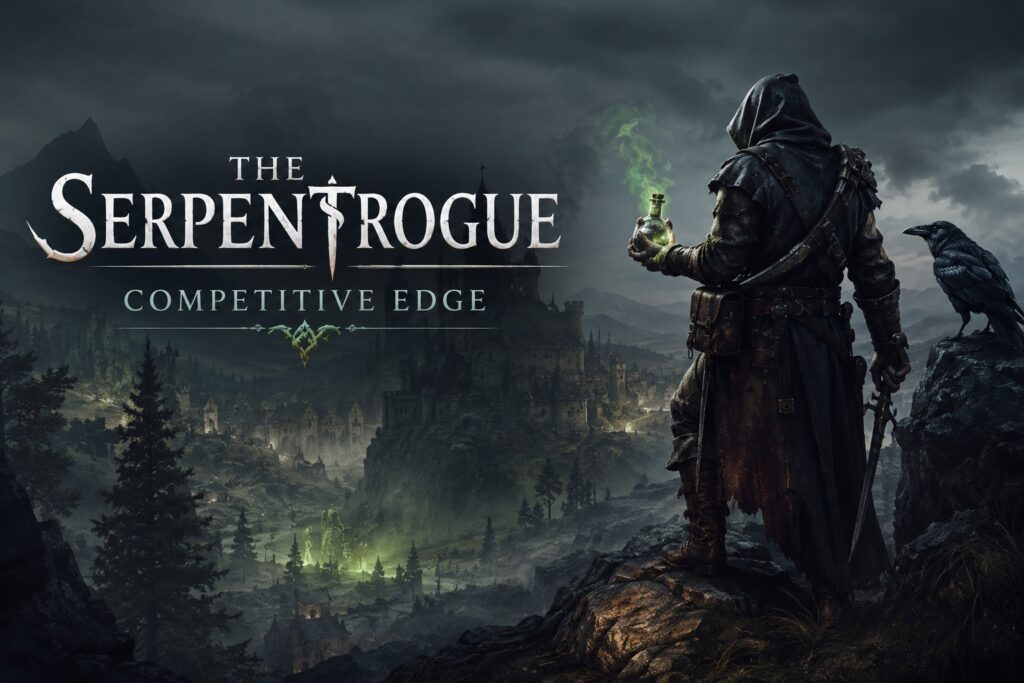
If you’ve searched for the Serpent Rogue competitive edge, you’re probably trying to understand what gives skilled players an advantage in The Serpent Rogue and how to progress more efficiently. Unlike many action-adventure games that reward brute force, The Serpent Rogue focuses on preparation, experimentation, and smart decision-making. Success depends less on powerful weapons and more on understanding the game’s interconnected systems.
Developed by Sengi Games and published by Team17, The Serpent Rogue combines action, exploration, alchemy, crafting, and survival mechanics in a dark fantasy world. Every expedition requires careful planning. The potions you brew, the resources you collect, and the choices you make all influence your chances of survival.
This guide explains what the serpentrogue competitive edge really means, why players search for it, and the gameplay mechanics that separate beginners from experienced players. Along the way, you’ll discover practical strategies, common mistakes to avoid, and expert insights that many shorter guides overlook.
What Is the Serpent Rogue Competitive Edge?
Quick Answer
The Serpent Rogue competitive edge refers to the combination of knowledge, strategy, and efficient resource management that allows players to progress more successfully in The Serpent Rogue. Instead of relying on stronger equipment alone, experienced players gain an advantage by mastering alchemy, understanding environmental hazards, planning expeditions, and adapting to changing conditions.
Unlike competitive multiplayer games, The Serpent Rogue is primarily a single-player experience. Therefore, “competitive edge” doesn’t mean defeating other players—it means consistently outperforming the game’s challenges through smarter gameplay.
Key Elements That Create an Advantage
A player develops a competitive edge by learning how to:
- Brew the right potion before leaving camp.
- Recognize valuable ingredients quickly.
- Manage inventory efficiently.
- Understand corruption mechanics.
- Choose when to fight and when to avoid combat.
- Upgrade equipment strategically.
- Maintain valuable resources.
- Adapt to changing environments.
Each of these skills contributes to long-term success far more than simply collecting stronger weapons.
Why People Search for This Term
The phrase the serpent rogue competitive edge has become increasingly popular because many players reach a point where the game’s difficulty suddenly increases. Unlike traditional RPGs that guide players with clear objectives, The Serpent Rogue expects experimentation and learning.
Common reasons players search for this topic include:
Understanding Difficult Gameplay Systems
The game introduces multiple interconnected mechanics without lengthy tutorials. New players often need help understanding how these systems work together.
Improving Survival
Many players struggle with limited supplies, dangerous enemies, and corruption spreading throughout the world.
Learning Better Alchemy
Potion brewing is one of the game’s defining mechanics, yet discovering recipes through experimentation can be confusing without understanding the underlying principles.
Finding Efficient Progression
Players often want to know:
- Which upgrades are most valuable?
- Which ingredients should always be collected?
- Which enemies should be avoided?
- How can resources be managed more effectively?
These questions all relate to gaining a stronger gameplay advantage.
The Serpent Rogue Overview
The Serpent Rogue is an action-adventure game with strong survival and alchemy elements set in a mysterious medieval fantasy world corrupted by supernatural forces.
Players control The Warden, an alchemist tasked with containing corruption while restoring balance to the environment. Rather than following a traditional hack-and-slash formula, the game encourages experimentation, careful observation, and thoughtful planning.
Main Gameplay Features
- Exploration across interconnected regions.
- Deep alchemy and potion crafting.
- Resource gathering.
- Creature interactions.
- Inventory management.
- Environmental hazards.
- Equipment upgrades.
- Dynamic corruption system.
- Puzzle-solving.
- Tactical combat.
Every system affects another, creating meaningful choices throughout the adventure.
Who Will Enjoy the Game?
The Serpent Rogue is especially suited for players who enjoy:
- Strategy-focused gameplay.
- Crafting systems.
- Exploration.
- Survival mechanics.
- Experimentation.
- Dark fantasy settings.
- Slow but rewarding progression.
Players expecting constant combat may find the pace slower, while those who enjoy learning complex systems often appreciate the depth it offers.
What “Competitive Edge” Means in The Serpent Rogue
In practical terms, having a competitive edge means making better decisions than an inexperienced player.
For example:
| Beginner Approach | Experienced Player’s Competitive Edge |
| Uses random potions | Prepares potions for the next objective |
| Carries unnecessary items | Optimizes inventory space |
| Fights every enemy | Avoids unnecessary battles |
| Ignores ingredient properties | Studies and uses ingredient effects |
| Explores without planning | Maps efficient exploration routes |
| Wastes crafting materials | Saves rare resources for high-value upgrades |
The biggest difference isn’t reaction speed—it’s preparation.
Knowledge Is More Valuable Than Power
Many players assume stronger weapons are the answer to every challenge. In reality, experienced players know that information is often the most valuable resource.
Understanding:
- Enemy behavior.
- Corruption spread.
- Item properties.
- Crafting priorities.
- Resource locations.
Will usually produce better results than simply upgrading equipment.
Core Gameplay Mechanics
The Serpent Rogue stands out because multiple gameplay systems work together rather than independently.
Exploration
Exploration rewards curiosity. Hidden areas often contain:
- Rare ingredients.
- Crafting materials.
- Valuable equipment.
- Secret paths.
- Environmental clues.
Careful observation frequently leads to better rewards than rushing through objectives.
Combat
Combat emphasizes timing and positioning over aggressive attacks.
Effective players:
- Study enemy patterns.
- Dodge before attacking.
- Use consumables wisely.
- Retreat when overwhelmed.
- Prepare for encounters instead of reacting to them.
Crafting
Crafting extends beyond weapons. Players create:
- Potions.
- Utility items.
- Equipment improvements.
- Helpful tools.
Knowing what to craft—and when—can significantly reduce unnecessary risk.
Reputation and World Interaction
NPCs and creatures react differently depending on your actions. Managing these interactions can open opportunities while reducing conflict, making careful decision-making an important part of long-term success.
Combat Strategy
Combat in The Serpent Rogue rewards patience, preparation, and smart decision-making more than fast reflexes. Many new players assume every enemy should be defeated immediately, but experienced players know that avoiding an unnecessary fight is often the better strategy.
Your goal is to preserve health, equipment durability, and valuable consumables while making steady progress through each area.
Prepare Before Every Expedition
Before entering a dangerous region, make sure you have:
- Healing potions
- Stamina recovery items
- Repair materials
- Food supplies
- Backup weapon
- Empty inventory slots for loot
Preparation often determines success before combat even begins.
Learn Enemy Attack Patterns
Each enemy follows recognizable behaviors.
Experienced players watch for:
- Attack animations
- Movement speed
- Attack range
- Recovery time
- Weak moments after heavy attacks
Instead of constantly attacking, wait for safe opportunities.
Positioning Matters More Than Damage
Standing in the wrong place often causes more problems than using weaker equipment.
Good positioning allows you to:
- Avoid being surrounded.
- Escape dangerous situations.
- Use terrain as protection.
- Separate groups of enemies.
- Control the pace of battle.
Know When to Retreat
One of the biggest competitive advantages is understanding that retreat is not failure.
Leave an area if:
- Health is critically low.
- Equipment is badly damaged.
- Inventory is full.
- Resources are nearly exhausted.
- Corruption becomes overwhelming.
Returning better prepared is usually more efficient than risking unnecessary losses.
Exploration & World Design
Exploration is one of the strongest aspects of The Serpent Rogue. The game encourages curiosity instead of rushing players toward objectives.
Every region contains opportunities for players who pay attention to their surroundings.
Explore Slowly
Instead of running directly toward objectives:
- Check abandoned buildings.
- Search hidden corners.
- Collect unusual ingredients.
- Observe environmental details.
- Mark valuable resource locations mentally.
Many rare crafting materials are hidden away from obvious paths.
Understand Environmental Hazards
Different areas present unique dangers, including:
- Corrupted zones
- Poisonous environments
- Dangerous wildlife
- Traps
- Hostile creatures
Learning these hazards reduces unnecessary resource loss.
Return to Previous Areas
As your abilities improve, previously inaccessible locations become easier to explore.
Revisiting older regions often rewards players with:
- Rare ingredients
- Hidden loot
- Easier resource farming
- Missed collectibles
Backtracking is an intentional part of progression rather than wasted time
Creature Management
Unlike many action RPGs, creatures in The Serpent Rogue are more than simple enemies.
Some can become useful allies depending on your choices.
Observe Before Acting
Not every creature attacks immediately.
Watch for:
- Movement patterns
- Aggression level
- Habitat
- Interaction with other creatures
Observation often reveals safer approaches.
Use Creatures Strategically
Certain creatures can:
- Distract enemies
- Create opportunities
- Protect specific areas
- Interact with environmental systems
Experienced players use the environment instead of relying only on direct combat.
Avoid Unnecessary Conflict
Defeating every creature wastes:
- Weapon durability
- Healing items
- Time
- Valuable stamina
Sometimes avoidance produces greater long-term rewards.
Crafting System
Crafting sits at the heart of The Serpent Rogue and directly contributes to gaining a competitive edge.
Everything from healing to exploration depends on efficient crafting.
Gather Everything Early
New players often ignore common materials.
Experienced players collect:
- Herbs
- Mushrooms
- Minerals
- Animal resources
- Plants
- Bottles
- Basic ingredients
Even common materials become valuable later.
Prioritize Utility
Rather than crafting only offensive items, focus on:
- Healing
- Status recovery
- Exploration support
- Equipment maintenance
- Resource efficiency
Balanced inventories outperform weapon-heavy setups.
Experiment Carefully
The game rewards experimentation.
Maintain notes about:
- Ingredient combinations
- Successful recipes
- Failed mixtures
- Useful discoveries
This reduces wasted resources over time.
Reputation & Consequences
Player actions influence how the world responds.
Although The Serpent Rogue does not use a traditional morality system, decisions still have noticeable consequences.
Every Decision Matters
Actions affect:
- Available resources
- NPC interactions
- Exploration opportunities
- Risk levels
- Overall progression
Careless choices may create additional obstacles later.
Think Long-Term
Instead of asking:
“Can I defeat this enemy?”
Experienced players ask:
“Should I engage this enemy?”
This shift in thinking dramatically improves resource management.
Advanced Expert Strategies
Experienced players gradually develop habits that make progression significantly smoother.
Plan Every Expedition
Before leaving camp ask:
- What resources do I need?
- Which potions should I carry?
- How much inventory space is available?
- Which enemies am I likely to face?
Preparation minimizes unnecessary risk.
Build Resource Reserves
Avoid spending rare ingredients immediately.
Maintaining reserves allows flexibility later when stronger recipes become available.
Master Efficient Routes
Repeated exploration reveals faster paths between important resource locations.
Experienced players memorize these routes to maximize efficiency.
Treat Alchemy as Your Main Weapon
Many players focus almost entirely on combat.
Experts understand that properly prepared potions often solve problems before fighting even begins.
Comparison Table
| Feature | Beginner Player | Experienced Player |
| Combat | Attacks immediately | Studies enemy behavior first |
| Exploration | Follows main objective | Fully explores each area |
| Alchemy | Uses few recipes | Regularly experiments |
| Crafting | Crafts only when necessary | Plans crafting in advance |
| Inventory | Frequently overloaded | Efficiently organized |
| Resources | Wastes rare materials | Saves valuable ingredients |
| Survival | Reacts to danger | Prevents dangerous situations |
| Progression | Focuses on combat | Balances every gameplay system |
Pros & Cons
Pros
- Deep alchemy mechanics encourage experimentation.
- Exploration feels meaningful and rewarding.
- Strategic gameplay offers long-term satisfaction.
- Resource management adds depth.
- Atmospheric dark fantasy world.
- Multiple interconnected gameplay systems.
- High replay value through different approaches.
Cons
- Steep learning curve for new players.
- Limited guidance during early progression.
- Inventory management requires patience.
- Combat can feel unforgiving without preparation.
- Some mechanics take time to fully understand.
Common Mistakes
Many new players unknowingly make the same errors.
Ignoring Alchemy
Alchemy is the foundation of progression, not an optional feature.
Fighting Every Enemy
Not every battle is worth the resources it consumes.
Selling Valuable Ingredients Too Early
Rare crafting materials become increasingly useful later in the game.
Carrying Too Much
A full inventory prevents efficient resource collection.
Skipping Exploration
Hidden areas often contain valuable ingredients and equipment.
Forgetting Equipment Maintenance
Damaged gear greatly increases difficulty.
Hidden Mechanics Competitors Missed
Several subtle gameplay systems contribute to the serpentrogue competitive edge, yet many guides only mention them briefly.
Preparation Outweighs Raw Stats
Character success is determined more by planning than by equipment alone. Players who prepare potions, organize supplies, and understand the environment consistently perform better than those relying only on stronger gear.
Environmental Awareness Saves Resources
Carefully observing hazards, enemy routes, and resource locations helps avoid unnecessary combat and reduces the need for healing items.
Inventory Space Is a Strategic Resource
Keeping a few inventory slots free before each expedition allows you to collect rare materials without sacrificing valuable items. Efficient inventory management becomes increasingly important as exploration expands.
Knowledge Creates Long-Term Progress
Every experiment, discovered ingredient property, and successful route builds experience that improves future expeditions. In The Serpent Rogue, understanding the game’s systems is often more valuable than obtaining better equipment.
These often-overlooked mechanics are what truly define the serpentrogue competitive edge, separating experienced players from those who rely only on combat.
Myths vs Facts
Many discussions about the serpentrogue competitive edge are based on assumptions rather than how the game actually works. Clearing up these misconceptions can help players progress more efficiently.
| Myth | Fact |
| You need the strongest weapon to succeed. | Preparation, alchemy, and resource management are usually more important than weapon strength. |
| Every enemy should be defeated. | Avoiding unnecessary combat often saves valuable resources and improves long-term progression. |
| Alchemy is optional. | Alchemy is one of the game’s core mechanics and is essential for overcoming many challenges. |
| Exploration only provides collectibles. | Careful exploration rewards players with ingredients, equipment, shortcuts, and useful discoveries. |
| Inventory management isn’t important. | Efficient inventory management directly affects exploration and survival. |
| Crafting is only useful late in the game. | Smart crafting provides benefits from the very beginning of the adventure. |
| The game rewards rushing objectives. | Slow, methodical exploration usually leads to better outcomes. |
| There is only one correct playstyle. | Players can succeed using different strategies as long as they understand the game’s systems. |
Is The Serpent Rogue Worth Playing?
For players who enjoy thoughtful gameplay, The Serpent Rogue offers a refreshing alternative to traditional action RPGs.
Rather than rewarding constant combat, the game encourages observation, experimentation, and planning. Every expedition feels meaningful because your decisions affect future progress.
Reasons You May Enjoy It
- Deep alchemy system
- Rewarding exploration
- Strong survival mechanics
- Strategic combat
- Dark fantasy atmosphere
- Meaningful resource management
- High replay value through experimentation
Potential Drawbacks
The game may not appeal to everyone.
Some players could find:
- A slower pace than typical action games.
- A learning curve due to limited tutorials.
- Inventory management demanding.
- Progression dependent on experimentation.
If you enjoy discovering mechanics on your own instead of following constant objectives, these aspects may actually become strengths rather than weaknesses.
Who Should Play It?
The Serpent Rogue is best suited for players who enjoy learning complex systems and solving problems creatively.
Recommended For
- Fans of survival games
- Players who enjoy crafting systems
- Exploration enthusiasts
- Strategy-focused gamers
- RPG fans looking for something different
- Players who enjoy experimentation
- Dark fantasy enthusiasts
May Not Be Ideal For
- Players wanting nonstop action.
- Those who dislike inventory management.
- Gamers looking for fast progression.
- Anyone expecting a traditional hack-and-slash experience.
Latest Updates (Publicly Verified)
As of this writing, no major publicly verified announcement of new gameplay expansion or sequel has been officially released for The Serpent Rogue beyond information shared through the developer’s and publisher’s official channels.
Players looking for the latest information should monitor:
- The official Team17 news page
- The official Sengi Games announcements
- Official Steam news for The Serpent Rogue
- Console storefront update pages
Avoid relying on rumors or unofficial social media posts unless the developer or publisher confirms them.
Frequently Asked Questions (FAQs)
1. What does the Serpent Rogue competitive edge mean?
It refers to the strategic advantage gained by mastering alchemy, exploration, resource management, and efficient decision-making rather than relying only on combat.
2. Is The Serpent Rogue a multiplayer game?
No. The Serpent Rogue is primarily designed as a single-player adventure.
3. Is alchemy necessary to complete the game?
Yes. Alchemy is one of the core gameplay systems and plays an important role throughout progression.
4. What is the biggest beginner mistake?
Many new players ignore experimentation and focus only on combat instead of learning how crafting and alchemy work together.
5. Does inventory management really matter?
Absolutely. Efficient inventory management allows players to gather more resources and avoid wasting valuable items.
6. Can every enemy be defeated?
Many enemies can be defeated, but avoiding unnecessary battles is often the smarter strategy because it preserves resources.
7. How long does it take to understand the game’s systems?
Most players become comfortable after several hours of experimentation, though mastering every mechanic takes considerably longer.
8. Is exploration rewarded?
Yes. Hidden areas frequently contain useful ingredients, equipment, shortcuts, and valuable crafting materials.
9. Does equipment alone provide a competitive edge?
No. Knowledge, preparation, and efficient resource management usually have a greater impact than equipment strength.
10. Is The Serpent Rogue worth buying today?
Players who enjoy strategic survival, exploration, and crafting are likely to appreciate its unique gameplay, while those seeking fast-paced action may prefer other titles.
Final Conclusion
Understanding the Serpent Rogue competitive edge goes far beyond learning combat techniques. The true advantage comes from mastering the game’s interconnected systems—alchemy, exploration, crafting, survival, and thoughtful resource management.
Unlike many action-adventure titles, The Serpent Rogue rewards patience over speed and preparation over raw strength. Players who take time to study enemy behavior, experiment with potion recipes, organize their inventory, and explore carefully will often find the game far more manageable and rewarding.
Whether you’re just starting your journey or looking to refine your strategy, focusing on these core mechanics will help you overcome challenges more consistently and enjoy everything the game has to offer.
SEO Title (58 Characters)
The SerpentRogue Competitive Edge: Complete Strategy Guide
Meta Description (152 Characters)
Learn the true SerpentRogue competitive edge, master alchemy, survival, combat, and advanced gameplay strategies with this complete guide.
URL Slug
the-serpentrogue-competitive-edge
Serpent Rogue Competitive Edge: Tips, Strategies & Expert Guide
Introduction
If you’ve searched for the Serpent Rogue competitive edge, you’re probably trying to understand what gives skilled players an advantage in The Serpent Rogue and how to progress more efficiently. Unlike many action-adventure games that reward brute force, The Serpent Rogue focuses on preparation, experimentation, and smart decision-making. Success depends less on powerful weapons and more on understanding the game’s interconnected systems.
Developed by Sengi Games and published by Team17, The Serpent Rogue combines action, exploration, alchemy, crafting, and survival mechanics in a dark fantasy world. Every expedition requires careful planning. The potions you brew, the resources you collect, and the choices you make all influence your chances of survival.
This guide explains what the serpentrogue competitive edge really means, why players search for it, and the gameplay mechanics that separate beginners from experienced players. Along the way, you’ll discover practical strategies, common mistakes to avoid, and expert insights that many shorter guides overlook.
What Is the Serpent Rogue Competitive Edge?
Quick Answer
The Serpent Rogue competitive edge refers to the combination of knowledge, strategy, and efficient resource management that allows players to progress more successfully in The Serpent Rogue. Instead of relying on stronger equipment alone, experienced players gain an advantage by mastering alchemy, understanding environmental hazards, planning expeditions, and adapting to changing conditions.
Unlike competitive multiplayer games, The Serpent Rogue is primarily a single-player experience. Therefore, “competitive edge” doesn’t mean defeating other players—it means consistently outperforming the game’s challenges through smarter gameplay.
Key Elements That Create an Advantage
A player develops a competitive edge by learning how to:
- Brew the right potion before leaving camp.
- Recognize valuable ingredients quickly.
- Manage inventory efficiently.
- Understand corruption mechanics.
- Choose when to fight and when to avoid combat.
- Upgrade equipment strategically.
- Maintain valuable resources.
- Adapt to changing environments.
Each of these skills contributes to long-term success far more than simply collecting stronger weapons.
Why People Search for This Term
The phrase the serpent rogue competitive edge has become increasingly popular because many players reach a point where the game’s difficulty suddenly increases. Unlike traditional RPGs that guide players with clear objectives, The Serpent Rogue expects experimentation and learning.
Common reasons players search for this topic include:
Understanding Difficult Gameplay Systems
The game introduces multiple interconnected mechanics without lengthy tutorials. New players often need help understanding how these systems work together.
Improving Survival
Many players struggle with limited supplies, dangerous enemies, and corruption spreading throughout the world.
Learning Better Alchemy
Potion brewing is one of the game’s defining mechanics, yet discovering recipes through experimentation can be confusing without understanding the underlying principles.
Finding Efficient Progression
Players often want to know:
- Which upgrades are most valuable?
- Which ingredients should always be collected?
- Which enemies should be avoided?
- How can resources be managed more effectively?
These questions all relate to gaining a stronger gameplay advantage.
The Serpent Rogue Overview
The Serpent Rogue is an action-adventure game with strong survival and alchemy elements set in a mysterious medieval fantasy world corrupted by supernatural forces.
Players control The Warden, an alchemist tasked with containing corruption while restoring balance to the environment. Rather than following a traditional hack-and-slash formula, the game encourages experimentation, careful observation, and thoughtful planning.
Main Gameplay Features
- Exploration across interconnected regions.
- Deep alchemy and potion crafting.
- Resource gathering.
- Creature interactions.
- Inventory management.
- Environmental hazards.
- Equipment upgrades.
- Dynamic corruption system.
- Puzzle-solving.
- Tactical combat.
Every system affects another, creating meaningful choices throughout the adventure.
Who Will Enjoy the Game?
The Serpent Rogue is especially suited for players who enjoy:
- Strategy-focused gameplay.
- Crafting systems.
- Exploration.
- Survival mechanics.
- Experimentation.
- Dark fantasy settings.
- Slow but rewarding progression.
Players expecting constant combat may find the pace slower, while those who enjoy learning complex systems often appreciate the depth it offers.
What “Competitive Edge” Means in The Serpent Rogue
In practical terms, having a competitive edge means making better decisions than an inexperienced player.
For example:
| Beginner Approach | Experienced Player’s Competitive Edge |
| Uses random potions | Prepares potions for the next objective |
| Carries unnecessary items | Optimizes inventory space |
| Fights every enemy | Avoids unnecessary battles |
| Ignores ingredient properties | Studies and uses ingredient effects |
| Explores without planning | Maps efficient exploration routes |
| Wastes crafting materials | Saves rare resources for high-value upgrades |
The biggest difference isn’t reaction speed—it’s preparation.
Knowledge Is More Valuable Than Power
Many players assume stronger weapons are the answer to every challenge. In reality, experienced players know that information is often the most valuable resource.
Understanding:
- Enemy behavior.
- Corruption spread.
- Item properties.
- Crafting priorities.
- Resource locations.
Will usually produce better results than simply upgrading equipment.
Core Gameplay Mechanics
The Serpent Rogue stands out because multiple gameplay systems work together rather than independently.
Exploration
Exploration rewards curiosity. Hidden areas often contain:
- Rare ingredients.
- Crafting materials.
- Valuable equipment.
- Secret paths.
- Environmental clues.
Careful observation frequently leads to better rewards than rushing through objectives.
Combat
Combat emphasizes timing and positioning over aggressive attacks.
Effective players:
- Study enemy patterns.
- Dodge before attacking.
- Use consumables wisely.
- Retreat when overwhelmed.
- Prepare for encounters instead of reacting to them.
Crafting
Crafting extends beyond weapons. Players create:
- Potions.
- Utility items.
- Equipment improvements.
- Helpful tools.
Knowing what to craft—and when—can significantly reduce unnecessary risk.
Reputation and World Interaction
NPCs and creatures react differently depending on your actions. Managing these interactions can open opportunities while reducing conflict, making careful decision-making an important part of long-term success.
Combat Strategy
Combat in The Serpent Rogue rewards patience, preparation, and smart decision-making more than fast reflexes. Many new players assume every enemy should be defeated immediately, but experienced players know that avoiding an unnecessary fight is often the better strategy.
Your goal is to preserve health, equipment durability, and valuable consumables while making steady progress through each area.
Prepare Before Every Expedition
Before entering a dangerous region, make sure you have:
- Healing potions
- Stamina recovery items
- Repair materials
- Food supplies
- Backup weapon
- Empty inventory slots for loot
Preparation often determines success before combat even begins.
Learn Enemy Attack Patterns
Each enemy follows recognizable behaviors.
Experienced players watch for:
- Attack animations
- Movement speed
- Attack range
- Recovery time
- Weak moments after heavy attacks
Instead of constantly attacking, wait for safe opportunities.
Positioning Matters More Than Damage
Standing in the wrong place often causes more problems than using weaker equipment.
Good positioning allows you to:
- Avoid being surrounded.
- Escape dangerous situations.
- Use terrain as protection.
- Separate groups of enemies.
- Control the pace of battle.
Know When to Retreat
One of the biggest competitive advantages is understanding that retreat is not failure.
Leave an area if:
- Health is critically low.
- Equipment is badly damaged.
- Inventory is full.
- Resources are nearly exhausted.
- Corruption becomes overwhelming.
Returning better prepared is usually more efficient than risking unnecessary losses.
Exploration & World Design
Exploration is one of the strongest aspects of The Serpent Rogue. The game encourages curiosity instead of rushing players toward objectives.
Every region contains opportunities for players who pay attention to their surroundings.
Explore Slowly
Instead of running directly toward objectives:
- Check abandoned buildings.
- Search hidden corners.
- Collect unusual ingredients.
- Observe environmental details.
- Mark valuable resource locations mentally.
Many rare crafting materials are hidden away from obvious paths.
Understand Environmental Hazards
Different areas present unique dangers, including:
- Corrupted zones
- Poisonous environments
- Dangerous wildlife
- Traps
- Hostile creatures
Learning these hazards reduces unnecessary resource loss.
Return to Previous Areas
As your abilities improve, previously inaccessible locations become easier to explore.
Revisiting older regions often rewards players with:
- Rare ingredients
- Hidden loot
- Easier resource farming
- Missed collectibles
Backtracking is an intentional part of progression rather than wasted time
Creature Management
Unlike many action RPGs, creatures in The Serpent Rogue are more than simple enemies.
Some can become useful allies depending on your choices.
Observe Before Acting
Not every creature attacks immediately.
Watch for:
- Movement patterns
- Aggression level
- Habitat
- Interaction with other creatures
Observation often reveals safer approaches.
Use Creatures Strategically
Certain creatures can:
- Distract enemies
- Create opportunities
- Protect specific areas
- Interact with environmental systems
Experienced players use the environment instead of relying only on direct combat.
Avoid Unnecessary Conflict
Defeating every creature wastes:
- Weapon durability
- Healing items
- Time
- Valuable stamina
Sometimes avoidance produces greater long-term rewards.
Crafting System
Crafting sits at the heart of The Serpent Rogue and directly contributes to gaining a competitive edge.
Everything from healing to exploration depends on efficient crafting.
Gather Everything Early
New players often ignore common materials.
Experienced players collect:
- Herbs
- Mushrooms
- Minerals
- Animal resources
- Plants
- Bottles
- Basic ingredients
Even common materials become valuable later.
Prioritize Utility
Rather than crafting only offensive items, focus on:
- Healing
- Status recovery
- Exploration support
- Equipment maintenance
- Resource efficiency
Balanced inventories outperform weapon-heavy setups.
Experiment Carefully
The game rewards experimentation.
Maintain notes about:
- Ingredient combinations
- Successful recipes
- Failed mixtures
- Useful discoveries
This reduces wasted resources over time.
Reputation & Consequences
Player actions influence how the world responds.
Although The Serpent Rogue does not use a traditional morality system, decisions still have noticeable consequences.
Every Decision Matters
Actions affect:
- Available resources
- NPC interactions
- Exploration opportunities
- Risk levels
- Overall progression
Careless choices may create additional obstacles later.
Think Long-Term
Instead of asking:
“Can I defeat this enemy?”
Experienced players ask:
“Should I engage this enemy?”
This shift in thinking dramatically improves resource management.
Advanced Expert Strategies
Experienced players gradually develop habits that make progression significantly smoother.
Plan Every Expedition
Before leaving camp ask:
- What resources do I need?
- Which potions should I carry?
- How much inventory space is available?
- Which enemies am I likely to face?
Preparation minimizes unnecessary risk.
Build Resource Reserves
Avoid spending rare ingredients immediately.
Maintaining reserves allows flexibility later when stronger recipes become available.
Master Efficient Routes
Repeated exploration reveals faster paths between important resource locations.
Experienced players memorize these routes to maximize efficiency.
Treat Alchemy as Your Main Weapon
Many players focus almost entirely on combat.
Experts understand that properly prepared potions often solve problems before fighting even begins.
Comparison Table
| Feature | Beginner Player | Experienced Player |
| Combat | Attacks immediately | Studies enemy behavior first |
| Exploration | Follows main objective | Fully explores each area |
| Alchemy | Uses few recipes | Regularly experiments |
| Crafting | Crafts only when necessary | Plans crafting in advance |
| Inventory | Frequently overloaded | Efficiently organized |
| Resources | Wastes rare materials | Saves valuable ingredients |
| Survival | Reacts to danger | Prevents dangerous situations |
| Progression | Focuses on combat | Balances every gameplay system |
Pros & Cons
Pros
- Deep alchemy mechanics encourage experimentation.
- Exploration feels meaningful and rewarding.
- Strategic gameplay offers long-term satisfaction.
- Resource management adds depth.
- Atmospheric dark fantasy world.
- Multiple interconnected gameplay systems.
- High replay value through different approaches.
Cons
- Steep learning curve for new players.
- Limited guidance during early progression.
- Inventory management requires patience.
- Combat can feel unforgiving without preparation.
- Some mechanics take time to fully understand.
Common Mistakes
Many new players unknowingly make the same errors.
Ignoring Alchemy
Alchemy is the foundation of progression, not an optional feature.
Fighting Every Enemy
Not every battle is worth the resources it consumes.
Selling Valuable Ingredients Too Early
Rare crafting materials become increasingly useful later in the game.
Carrying Too Much
A full inventory prevents efficient resource collection.
Skipping Exploration
Hidden areas often contain valuable ingredients and equipment.
Forgetting Equipment Maintenance
Damaged gear greatly increases difficulty.
Hidden Mechanics Competitors Missed
Several subtle gameplay systems contribute to the serpentrogue competitive edge, yet many guides only mention them briefly.
Preparation Outweighs Raw Stats
Character success is determined more by planning than by equipment alone. Players who prepare potions, organize supplies, and understand the environment consistently perform better than those relying only on stronger gear.
Environmental Awareness Saves Resources
Carefully observing hazards, enemy routes, and resource locations helps avoid unnecessary combat and reduces the need for healing items.
Inventory Space Is a Strategic Resource
Keeping a few inventory slots free before each expedition allows you to collect rare materials without sacrificing valuable items. Efficient inventory management becomes increasingly important as exploration expands.
Knowledge Creates Long-Term Progress
Every experiment, discovered ingredient property, and successful route builds experience that improves future expeditions. In The Serpent Rogue, understanding the game’s systems is often more valuable than obtaining better equipment.
These often-overlooked mechanics are what truly define the serpentrogue competitive edge, separating experienced players from those who rely only on combat.
Myths vs Facts
Many discussions about the serpentrogue competitive edge are based on assumptions rather than how the game actually works. Clearing up these misconceptions can help players progress more efficiently.
| Myth | Fact |
| You need the strongest weapon to succeed. | Preparation, alchemy, and resource management are usually more important than weapon strength. |
| Every enemy should be defeated. | Avoiding unnecessary combat often saves valuable resources and improves long-term progression. |
| Alchemy is optional. | Alchemy is one of the game’s core mechanics and is essential for overcoming many challenges. |
| Exploration only provides collectibles. | Careful exploration rewards players with ingredients, equipment, shortcuts, and useful discoveries. |
| Inventory management isn’t important. | Efficient inventory management directly affects exploration and survival. |
| Crafting is only useful late in the game. | Smart crafting provides benefits from the very beginning of the adventure. |
| The game rewards rushing objectives. | Slow, methodical exploration usually leads to better outcomes. |
| There is only one correct playstyle. | Players can succeed using different strategies as long as they understand the game’s systems. |
Is The Serpent Rogue Worth Playing?
For players who enjoy thoughtful gameplay, The Serpent Rogue offers a refreshing alternative to traditional action RPGs.
Rather than rewarding constant combat, the game encourages observation, experimentation, and planning. Every expedition feels meaningful because your decisions affect future progress.
Reasons You May Enjoy It
- Deep alchemy system
- Rewarding exploration
- Strong survival mechanics
- Strategic combat
- Dark fantasy atmosphere
- Meaningful resource management
- High replay value through experimentation
Potential Drawbacks
The game may not appeal to everyone.
Some players could find:
- A slower pace than typical action games.
- A learning curve due to limited tutorials.
- Inventory management demanding.
- Progression dependent on experimentation.
If you enjoy discovering mechanics on your own instead of following constant objectives, these aspects may actually become strengths rather than weaknesses.
Who Should Play It?
The Serpent Rogue is best suited for players who enjoy learning complex systems and solving problems creatively.
Recommended For
- Fans of survival games
- Players who enjoy crafting systems
- Exploration enthusiasts
- Strategy-focused gamers
- RPG fans looking for something different
- Players who enjoy experimentation
- Dark fantasy enthusiasts
May Not Be Ideal For
- Players wanting nonstop action.
- Those who dislike inventory management.
- Gamers looking for fast progression.
- Anyone expecting a traditional hack-and-slash experience.
Latest Updates (Publicly Verified)
As of this writing, no major publicly verified announcement of new gameplay expansion or sequel has been officially released for The Serpent Rogue beyond information shared through the developer’s and publisher’s official channels.
Players looking for the latest information should monitor:
- The official Team17 news page
- The official Sengi Games announcements
- Official Steam news for The Serpent Rogue
- Console storefront update pages
Avoid relying on rumors or unofficial social media posts unless the developer or publisher confirms them.
Frequently Asked Questions (FAQs)
1. What does the serpentrogue competitive edge mean?
It refers to the strategic advantage gained by mastering alchemy, exploration, resource management, and efficient decision-making rather than relying only on combat.
2. Is The Serpent Rogue a multiplayer game?
No. The Serpent Rogue is primarily designed as a single-player adventure.
3. Is alchemy necessary to complete the game?
Yes. Alchemy is one of the core gameplay systems and plays an important role throughout progression.
4. What is the biggest beginner mistake?
Many new players ignore experimentation and focus only on combat instead of learning how crafting and alchemy work together.
5. Does inventory management really matter?
Absolutely. Efficient inventory management allows players to gather more resources and avoid wasting valuable items.
6. Can every enemy be defeated?
Many enemies can be defeated, but avoiding unnecessary battles is often the smarter strategy because it preserves resources.
7. How long does it take to understand the game’s systems?
Most players become comfortable after several hours of experimentation, though mastering every mechanic takes considerably longer.
8. Is exploration rewarded?
Yes. Hidden areas frequently contain useful ingredients, equipment, shortcuts, and valuable crafting materials.
9. Does equipment alone provide a competitive edge?
No. Knowledge, preparation, and efficient resource management usually have a greater impact than equipment strength.
10. Is The Serpent Rogue worth buying today?
Players who enjoy strategic survival, exploration, and crafting are likely to appreciate its unique gameplay, while those seeking fast-paced action may prefer other titles.
Final Conclusion
Understanding the Serpent Rogue competitive edge goes far beyond learning combat techniques. The true advantage comes from mastering the game’s interconnected systems—alchemy, exploration, crafting, survival, and thoughtful resource management.
Unlike many action-adventure titles, The Serpent Rogue rewards patience over speed and preparation over raw strength. Players who take time to study enemy behavior, experiment with potion recipes, organize their inventory, and explore carefully will often find the game far more manageable and rewarding.
Whether you’re just starting your journey or looking to refine your strategy, focusing on these core mechanics will help you overcome challenges more consistently and enjoy everything the game has to offer.
SEO Title (58 Characters)
The SerpentRogue Competitive Edge: Complete Strategy Guide
Meta Description (152 Characters)
Learn the true SerpentRogue competitive edge, master alchemy, survival, combat, and advanced gameplay strategies with this complete guide.
URL Slug
the-serpentrogue-competitive-edge


