


Introduction
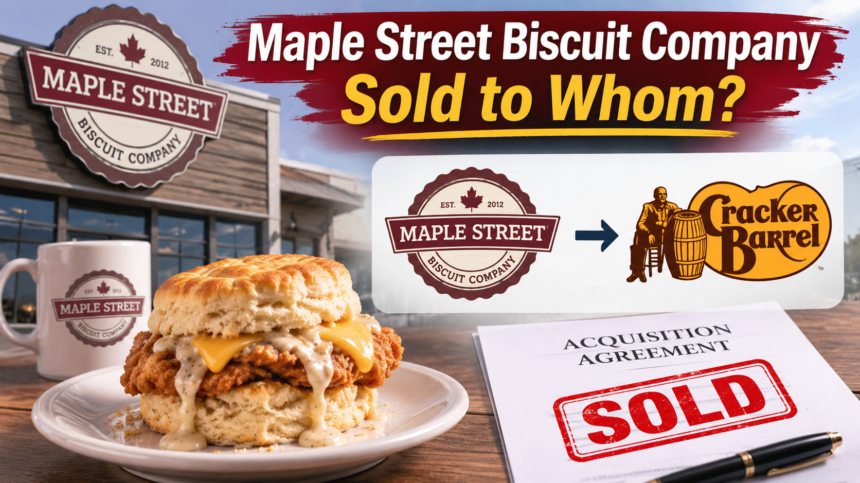
Maple Street Biscuit Company sold to whom? It’s a question many loyal customers, investors, and restaurant industry followers have asked since the popular Southern breakfast chain changed ownership. Known for its made-from-scratch biscuits, fried chicken sandwiches, and welcoming neighborhood atmosphere, Maple Street Biscuit Company grew from a single Florida restaurant into one of America’s fastest-growing breakfast brands.
The company’s acquisition marked an important milestone in the competitive restaurant industry. While many restaurant chains struggle to maintain growth, Maple Street Biscuit Company attracted the attention of a major publicly traded restaurant operator that saw significant long-term potential in its unique concept.
In this guide, you’ll learn who bought Maple Street Biscuit Company, why the acquisition took place, how the company evolved before the sale, and what the deal means for customers, employees, and the future of the brand. Where financial or operational details have not been publicly confirmed, this article clearly distinguishes verified information from speculation.
Featured Snippet
Who bought Maple Street Biscuit Company?
Maple Street Biscuit Company was acquired by Cracker Barrel Old Country Store, Inc. in 2019. The acquisition allowed Cracker Barrel to expand into the fast-casual breakfast market while keeping Maple Street Biscuit Company operating under its own brand identity.
Key Takeaways
- Maple Street Biscuit Company was acquired by Cracker Barrel Old Country Store in 2019.
- The acquisition helped Cracker Barrel diversify beyond its traditional full-service restaurant model.
- Maple Street Biscuit Company continues operating under its own brand name.
- The chain is known for Southern-inspired breakfast and brunch dishes made with fresh ingredients.
- Before the acquisition, the company experienced rapid expansion across multiple U.S. states.
- The brand’s community-focused culture and premium breakfast menu made it an attractive acquisition target.
- The sale reflected the growing popularity of fast-casual breakfast concepts in the U.S.
Maple Street Biscuit Company Sold to Whom?
The answer is straightforward: Cracker Barrel Old Country Store, Inc. acquired Maple Street Biscuit Company in 2019.
Cracker Barrel announced the purchase as part of its long-term growth strategy.Maple Street Biscuit Company Sold to Whom? Rather than simply expanding more Cracker Barrel locations, the company wanted to strengthen its position in the fast-growing breakfast and brunch segment.
Maple Street Biscuit Company stood out because of its:
- Fresh, made-from-scratch menu
- Strong customer loyalty
- Fast-casual dining model
- Community-focused restaurant culture
- Consistent expansion into new markets
The acquisition also gave Cracker Barrel access to a younger customer base that appreciated quick service without sacrificing food quality.
Why Was the Acquisition Important?
Several factors made the acquisition significant:
| Factor | Importance |
| Breakfast Market Growth | Breakfast remains one of the fastest-growing restaurant segments. |
| Fast-Casual Dining | Consumers increasingly prefer quick service with higher-quality food. |
| Brand Diversification | Cracker Barrel expanded beyond its traditional roadside restaurant model. |
| Geographic Expansion | Maple Street had opportunities to grow into new regions. |
| Menu Innovation | The acquisition brought fresh menu ideas to Cracker Barrel’s portfolio. |
Unlike many acquisitions where the original brand disappears, Maple Street Biscuit Company continued operating under its established identity after the purchase.
Background of Maple Street Biscuit Company
Maple Street Biscuit Company began with a simple vision: serve high-quality Southern comfort food while creating a welcoming environment where every guest feels like part of the community.
Instead of competing with traditional fast-food chains, the founders focused on premium ingredients, handcrafted biscuits, and friendly customer service.Maple Street Biscuit Company Sold to Whom? This approach quickly distinguished the company from many breakfast competitors.
The menu became known for items such as:
- Scratch-made biscuits
- Southern-style fried chicken
- House-made jams
- Fresh breakfast bowls
- Specialty coffee
- Seasonal menu offerings
Another defining feature was the company’s emphasis on local communities. Many locations encouraged conversations among guests and reflected neighborhood culture through décor and hospitality.
Business Philosophy
Maple Street Biscuit Company built its reputation on several core principles:
- Fresh ingredients prepared daily
- Genuine hospitality
- Community involvement
- Consistent food quality
- Comfortable dining atmosphere
These values helped the brand maintain customer loyalty even as it expanded into new markets.
Company History
Maple Street Biscuit Company was founded in Jacksonville, Florida, in 2012 by Scott Moore, Gus Evans, and Brent Moore, who set out to create a breakfast restaurant that combined Southern comfort food with a neighborhood gathering place.Maple Street Biscuit Company Sold to Whom?
The first restaurant quickly gained attention for its distinctive menu and welcoming atmosphere. Positive customer reviews and repeat visits fueled early growth, encouraging the founders to open additional locations.
As demand increased, the company expanded across several southeastern states. Rather than pursuing rapid nationwide growth, Maple Street focused on maintaining food quality, staff training, and a consistent guest experience.
This measured approach helped build a strong reputation before the company attracted interest from larger restaurant operators.
Early Milestones
| Year | Milestone |
| 2012 | First Maple Street Biscuit Company restaurant opened in Jacksonville, Florida. |
| 2013–2015 | Expansion into additional Florida markets. |
| 2016–2018 | Growth into neighboring southeastern states and increased brand recognition. |
| 2019 | Acquired by Cracker Barrel Old Country Store, Inc. |
The company’s success reflected broader consumer demand for premium breakfast concepts offering fresh, made-to-order meals in a fast-casual setting.
Growth Timeline
The following timeline highlights Maple Street Biscuit Company’s development before and after its acquisition:
| Period | Key Development |
| 2012 | Brand founded in Jacksonville, Florida. |
| 2013 | Strong local customer base established. |
| 2014–2016 | Expansion across Florida and nearby states. |
| 2017–2018 | Continued growth and rising national recognition. |
| 2019 | Acquired by Cracker Barrel Old Country Store, Inc. |
| 2020–Present | Ongoing expansion under Cracker Barrel ownership while maintaining the Maple Street brand. |
Growth Factors
Several elements contributed to the company’s expansion:
- Strong customer satisfaction
- Positive word-of-mouth marketing
- Premium breakfast positioning
- Efficient restaurant operations
- High-quality ingredients
- Community-focused brand identity
- Increasing popularity of brunch dining
Why the Brand Became Popular
Maple Street Biscuit Company succeeded by offering more than just breakfast.Maple Street Biscuit Company Sold to Whom? It created a dining experience centered on hospitality, comfort, and quality.
1. Signature Southern Menu
The restaurant became well known for:
- Buttermilk biscuits
- Crispy fried chicken
- Scratch-made gravy
- Fresh jams
- Breakfast tacos
- Seasonal specials
These menu items differentiated the chain from traditional quick-service breakfast restaurants.
2. Premium Ingredients
Rather than emphasizing low prices alone, Maple Street focused on fresh ingredients and handcrafted preparation, appealing to customers seeking higher-quality meals.
3. Community Atmosphere
Many locations fostered a neighborhood feel through friendly service and local engagement, helping build a loyal customer base.
4. Fast-Casual Convenience
The brand combined the speed of quick-service dining with the food quality and ambiance of a sit-down restaurant.
5. Strong Customer Loyalty
Satisfied customers frequently recommended the restaurant through online reviews and social media, driving organic growth without relying solely on traditional advertising.
Expert Insight
Restaurant brands often become attractive acquisition targets when they demonstrate consistent customer loyalty, a differentiated concept, and room for expansion. Maple Street Biscuit Company met these criteria, making it a strategic fit for Cracker Barrel’s long-term growth plans.
Details of the Acquisition
The acquisition of Maple Street Biscuit Company marked a strategic move in the U.S. restaurant industry. On October 22, 2019, Cracker Barrel Old Country Store, Inc. announced that it had entered into an agreement to acquire Maple Street Biscuit Company, a fast-growing breakfast and brunch chain headquartered in Jacksonville, Florida.
At the time of the announcement, Maple Street Biscuit Company had grown from a single neighborhood restaurant into a respected regional brand with locations across several southeastern states. Its reputation for scratch-made Southern breakfast dishes, strong customer loyalty, and community-focused culture made it an attractive acquisition target.
Unlike many restaurant acquisitions where the acquired company is absorbed into the parent brand, Cracker Barrel stated that Maple Street Biscuit Company would continue operating under its own name while benefiting from additional resources and support.
Acquisition Highlights
| Detail | Verified Information |
| Acquirer | Cracker Barrel Old Country Store, Inc. |
| Acquired Company | Maple Street Biscuit Company |
| Announcement Date | October 22, 2019 |
| Industry | Fast-casual breakfast and brunch |
| Headquarters | Jacksonville, Florida |
| Brand Status After Acquisition | Continued operating under the Maple Street Biscuit Company brand |
The acquisition reflected a broader trend in the restaurant industry, where established companies invest in fast-growing concepts rather than developing entirely new brands from scratch.
Who Bought Maple Street Biscuit Company?
The answer to “Maple Street Biscuit Company sold to whom?” is clear:
Maple Street Biscuit Company was acquired by Cracker Barrel Old Country Store, Inc. in 2019.
Cracker Barrel is one of America’s best-known casual dining companies, operating hundreds of restaurants and retail stores across the United States. Before the acquisition, its business primarily focused on full-service restaurants located near interstate highways.
By purchasing Maple Street Biscuit Company, Cracker Barrel gained access to a different segment of the restaurant market:
- Fast-casual dining
- Urban and suburban neighborhoods
- Younger demographics
- Premium breakfast and brunch customers
This allowed the company to diversify beyond its traditional roadside restaurant model.
About Cracker Barrel
Founded in 1969, Cracker Barrel has built its reputation around:
- Southern-inspired comfort food
- Family dining
- Country-store retail experience
- Nationwide restaurant network
Adding Maple Street Biscuit Company expanded its portfolio into a faster-growing dining category while complementing its existing brand.
Why the Deal Happened
Restaurant acquisitions are typically driven by long-term strategic goals rather than short-term gains.Maple Street Biscuit Company Sold to Whom? In this case, several factors made Maple Street Biscuit Company an attractive investment.
1. Fast-Growing Breakfast Segment
Breakfast and brunch have become increasingly important in the restaurant industry. Consumers are spending more on premium morning meals, creating opportunities for brands specializing in this category.
Maple Street Biscuit Company had already established itself as a leader in Southern-inspired breakfast dining.
2. Strong Brand Reputation
The company earned consistently positive customer reviews because of its:
- Scratch-made biscuits
- High-quality ingredients
- Friendly service
- Community atmosphere
- Innovative menu
A loyal customer base reduced the risks typically associated with acquisitions.
3. Expansion Potential
Before the acquisition, Maple Street had demonstrated successful growth across multiple states.
Cracker Barrel believed the concept could expand into additional markets while maintaining its unique identity.
4. Portfolio Diversification
Rather than relying solely on one restaurant concept, Cracker Barrel aimed to build a broader portfolio capable of serving different customer preferences.
The acquisition strengthened its presence in:
- Breakfast
- Brunch
- Fast-casual dining
- Urban markets
5. Operational Synergies
Although Maple Street continued operating independently, it could benefit from Cracker Barrel’s experience in areas such as:
- Supply chain management
- Purchasing
- Real estate selection
- Restaurant operations
- Technology investments
Financial Details (Only Publicly Verified Information)
Cracker Barrel disclosed the purchase price in its official announcement.
Verified Information
- Purchase Price: Approximately $36 million in cash
- Announcement Date: October 22, 2019
- Buyer: Cracker Barrel Old Country Store, Inc.
At the time of the acquisition:
- Maple Street Biscuit Company operated more than 25 restaurants.
- Locations were concentrated in the southeastern United States.
- The company had demonstrated steady sales growth and brand recognition.
Important Note
No publicly verified information confirms every financial detail of the transaction, such as:
- Individual shareholder payouts
- Founder compensation
- Future earn-out agreements
- Internal profitability figures
Any claims beyond Cracker Barrel’s official disclosures should be treated as unverified unless supported by reliable public filings.
Cracker Barrel’s Strategy
The acquisition was part of a broader strategy to adapt to changing consumer preferences.
Expanding Beyond Traditional Dining
Cracker Barrel has long been associated with:
- Highway travel
- Family meals
- Full-service restaurants
However, younger consumers increasingly seek:
- Faster service
- Premium ingredients
- Convenient locations
- Modern dining experiences
Maple Street Biscuit Company fit these evolving preferences.
Access to New Markets
Many Maple Street restaurants are located in neighborhoods rather than interstate travel corridors.
This gave Cracker Barrel exposure to customers who might not regularly visit its traditional restaurants.
Maintaining Brand Identity
Instead of rebranding Maple Street, Cracker Barrel preserved its:
- Menu
- Culture
- Customer experience
- Restaurant design
- Community engagement
Maintaining these strengths helped protect the brand’s loyal following.
Business Impact
The acquisition had implications for both companies.
Benefits for Maple Street Biscuit Company
- Greater financial resources
- Access to operational expertise
- Stronger purchasing power
- Improved expansion opportunities
- Increased brand visibility
Benefits for Cracker Barrel
- Entry into the fast-casual breakfast market
- Diversified revenue streams
- Opportunity for long-term growth
- Access to a younger customer demographic
- Broader restaurant portfolio
Industry Perspective
The deal highlighted a growing trend in which established restaurant companies acquire successful niche brands instead of building new concepts internally.
Customer Impact
For regular guests, the acquisition did not immediately change the dining experience.
Customers generally continued to enjoy:
- Signature biscuits
- Fried chicken dishes
- Breakfast bowls
- Friendly service
- Community atmosphere
Because the Maple Street brand remained intact, many customers noticed little difference after the ownership change.
Potential long-term benefits included:
- New restaurant openings
- Technology improvements
- Menu innovation
- Operational efficiencies
- Increased brand investment
Franchise Expansion
A common question after the acquisition was whether Maple Street Biscuit Company would significantly expand through franchising.
What Is Publicly Known?
Following the acquisition, Cracker Barrel expressed interest in growing the Maple Street concept. However, growth has primarily focused on company-operated restaurants rather than a broad public franchise model.
As of publicly available information, there is no confirmed large-scale national franchise program comparable to many other restaurant chains.
Future expansion decisions depend on factors such as:
- Market demand
- Real estate opportunities
- Operational capacity
- Company strategy
Prospective operators should rely on official company announcements rather than third-party franchise claims.
Comparison Table
| Category | Before Acquisition | After Acquisition |
| Ownership | Independent company | Cracker Barrel Old Country Store, Inc. |
| Brand Name | Maple Street Biscuit Company | Remained the same |
| Primary Focus | Fast-casual breakfast | Fast-casual breakfast |
| Restaurant Operations | Independent | Backed by Cracker Barrel resources |
| Expansion Potential | Regional growth | Increased long-term growth opportunities |
| Customer Experience | Southern hospitality | Largely unchanged |
| Menu | Scratch-made breakfast | Continued signature menu with ongoing innovation |
Expert Analysis
From a strategic business perspective, the acquisition was a logical fit.
Maple Street Biscuit Company had already demonstrated a strong brand identity, customer loyalty, and a differentiated menu—qualities that often make restaurant concepts attractive acquisition targets. Rather than competing directly with Maple Street, Cracker Barrel chose to invest in a brand that complemented its existing business.
The deal also reflected broader trends in the restaurant industry:
- Consumers continue to value premium breakfast and brunch experiences.
- Fast-casual concepts remain attractive due to convenience and perceived quality.
- Large restaurant companies increasingly pursue acquisitions to accelerate growth instead of creating new brands from the ground up.
Importantly, Cracker Barrel’s decision to retain the Maple Street name and operating style helped preserve customer trust while providing the financial and operational support needed for future expansion.
Expert Tip
When evaluating restaurant acquisitions, don’t focus solely on the purchase price. Consider the acquired company’s brand strength, customer loyalty, market positioning, and long-term growth potential. In the case of Maple Street Biscuit Company, these intangible assets were among the most valuable aspects of the transaction.
What Happened After the Sale?
Following the acquisition in 2019, Maple Street Biscuit Company continued operating under its own brand rather than being merged into Cracker Barrel’s traditional restaurant format. This approach allowed the company to preserve the qualities that had made it successful—its neighborhood atmosphere, scratch-made Southern breakfast menu, and community-first culture.
In the months after the acquisition, customers generally experienced little disruption. Existing restaurants continued serving familiar menu favorites, while the company focused on maintaining operational consistency and exploring measured expansion opportunities.
Like much of the restaurant industry, Maple Street also faced challenges during the COVID-19 pandemic. Consumer dining habits shifted toward takeout, curbside pickup, and digital ordering. Although the pandemic slowed expansion plans across the industry, Maple Street adapted by improving convenience while maintaining its emphasis on food quality and hospitality.
Several positive developments followed the acquisition:
- Continued operation under the Maple Street Biscuit Company name
- Ongoing investment from Cracker Barrel
- Increased access to operational resources
- Expansion into additional markets over time
- Continued focus on premium breakfast and brunch offerings
Rather than making dramatic changes, Cracker Barrel chose a long-term strategy centered on gradual growth and brand preservation.
Leadership Changes
One of the biggest concerns after any acquisition is whether leadership changes will alter the company’s culture.
What Is Publicly Known?
Following the acquisition, Maple Street Biscuit Company remained a distinct operating brand within Cracker Barrel’s business portfolio. While corporate oversight shifted to the parent company, there was no immediate public announcement suggesting that the restaurant’s customer experience or core operating philosophy would change significantly.
As with most acquisitions:
- Strategic decisions became aligned with Cracker Barrel’s corporate objectives.
- Operational support increased through the parent company’s resources.
- The Maple Street brand identity remained intact.
Why Leadership Continuity Matters
Maintaining continuity offers several advantages:
- Preserves employee confidence
- Maintains customer trust
- Protects brand reputation
- Ensures consistent food quality
- Supports long-term growth
Restaurant acquisitions often fail when a new owner changes the brand too quickly. By allowing Maple Street to retain its unique identity, Cracker Barrel reduced that risk.
Restaurant Expansion
Before the acquisition, Maple Street Biscuit Company had already expanded beyond its Florida roots into several southeastern states.
After becoming part of Cracker Barrel, the company gained access to:
- Greater financial resources
- Site selection expertise
- Purchasing efficiencies
- Operational support
- National business experience
These advantages strengthened its ability to pursue future expansion.
Expansion Priorities
Rather than opening restaurants as quickly as possible, Maple Street has generally emphasized sustainable growth. This includes:
- Selecting markets with strong demand
- Maintaining food quality standards
- Training restaurant teams thoroughly
- Preserving the neighborhood atmosphere that defines the brand
Growth Opportunities
Industry analysts continue to identify opportunities in:
- Suburban communities
- High-growth metropolitan areas
- Mixed-use developments
- Breakfast-focused dining markets
Any future expansion pace will depend on business performance, consumer demand, and broader economic conditions.
Future Outlook
The long-term outlook for Maple Street Biscuit Company remains positive, although future performance will depend on market conditions and company strategy.
Several factors support continued growth:
Continued Demand for Breakfast
Breakfast and brunch remain among the most resilient restaurant categories, with consumers increasingly seeking premium dining experiences throughout the day.
Brand Differentiation
Maple Street’s combination of Southern comfort food, scratch-made biscuits, and community-focused service helps distinguish it from traditional fast-food breakfast chains.
Backing from Cracker Barrel
As part of a larger publicly traded company, Maple Street benefits from:
- Financial stability
- Operational expertise
- Supply chain efficiencies
- Technology investments
- Real estate knowledge
Potential Challenges
Like every restaurant brand, Maple Street faces ongoing challenges, including:
- Rising food costs
- Labor shortages
- Inflation
- Competitive breakfast market
- Changing consumer preferences
Successfully balancing growth with consistent quality will remain one of the company’s most important priorities.
Industry Trends
The acquisition of Maple Street Biscuit Company reflects several broader trends shaping the restaurant industry.
1. Premium Breakfast Growth
Consumers increasingly prefer high-quality breakfast and brunch experiences over traditional fast-food options.
2. Fast-Casual Dining
Fast-casual restaurants continue attracting customers by combining speed with higher-quality ingredients and a more comfortable dining environment.
3. Strategic Acquisitions
Large restaurant companies often acquire successful regional brands instead of developing new concepts from the ground up.
4. Digital Ordering
Online ordering, mobile apps, curbside pickup, and delivery services have become standard expectations for many restaurant customers.
5. Community-Centered Brands
Consumers increasingly value restaurants that create welcoming spaces and engage with local communities.
Common Myths
Myth 1: Maple Street Biscuit Company closed after being sold.
Fact: The company continued operating under the Maple Street Biscuit Company brand after the acquisition by Cracker Barrel.
Myth 2: Cracker Barrel completely changed the menu.
Fact: Signature menu items remained central to the brand, although restaurant menus naturally evolve over time.
Myth 3: Every location became a Cracker Barrel restaurant.
Fact: Maple Street locations continued operating under their original brand identity.
Myth 4: The acquisition meant immediate nationwide expansion.
Fact: Growth has been measured and based on business strategy rather than rapid nationwide rollout.
Myth 5: The financial terms beyond the announced purchase price are fully public.
Fact: While Cracker Barrel publicly disclosed the approximate $36 million purchase price, not every detail of the transaction has been publicly released.
Expert Tips
If you’re researching restaurant acquisitions or evaluating growth opportunities, consider these best practices:
Look Beyond the Purchase Price
A successful acquisition is often driven by intangible assets such as:
- Customer loyalty
- Brand reputation
- Operational systems
- Experienced leadership
- Market positioning
Use Official Sources
For the most accurate information, rely on:
- Cracker Barrel investor relations
- U.S. Securities and Exchange Commission (SEC) filings
- Official company announcements
- Reputable financial news organizations
Avoid relying solely on unverified social media posts or unofficial reports.
Watch Long-Term Performance
The true success of an acquisition is typically measured over several years, not immediately after the transaction.
Pros & Cons
| Pros | Cons |
| Financial backing from Cracker Barrel | Integration can present operational challenges |
| Stronger expansion opportunities | Growth may be slower than some customers expect |
| Continued brand identity | Increased competition in the breakfast market |
| Greater operational resources | Economic conditions can affect expansion plans |
| Improved purchasing power | Rising labor and food costs remain industry-wide challenges |
| Opportunity for menu innovation | Balancing growth with brand consistency requires careful management |
Conclusion
If you’ve been wondering “Maple Street Biscuit Company sold to whom?”, the answer is straightforward: Cracker Barrel Old Country Store, Inc. acquired Maple Street Biscuit Company in 2019 as part of its strategy to expand into the fast-casual breakfast market.
Rather than replacing the Maple Street brand, Cracker Barrel chose to preserve its identity, allowing the company to continue serving the Southern-inspired breakfast dishes and community-focused experience that made it popular. This approach helped maintain customer loyalty while providing access to greater financial and operational resources.
Although no acquisition guarantees long-term success,Maple Street Biscuit Company Sold to Whom? Maple Street Biscuit Company entered the partnership with a strong reputation, loyal customer base, and differentiated concept. Its future growth will depend on maintaining those strengths while adapting to changing consumer preferences and industry trends.
For diners, the acquisition has largely meant continuity rather than disruption. For investors and restaurant industry observers, it remains an example of how established companies can strengthen their portfolios by acquiring well-positioned regional brands instead of building new concepts from scratch.
As new information becomes publicly available through official company announcements or SEC filings, it will provide additional insight into the brand’s continued expansion and long-term strategy.