


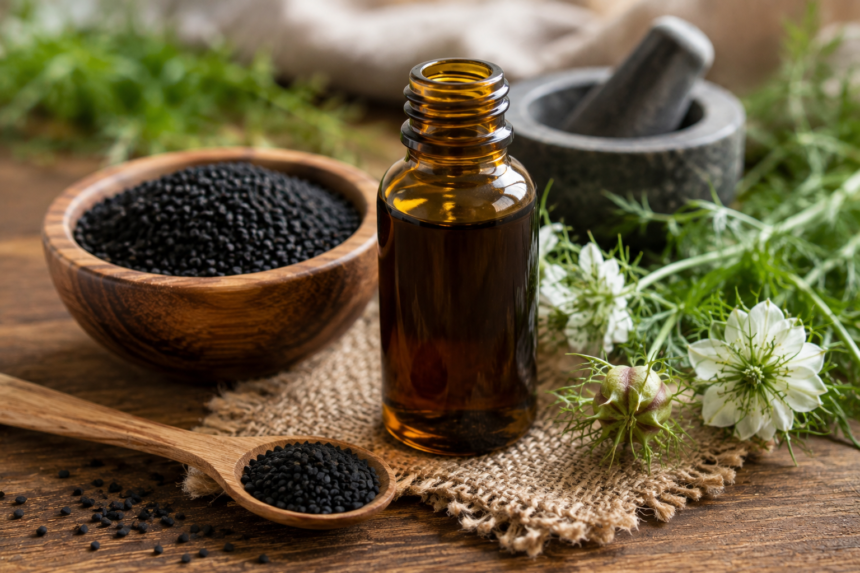
Black Seed Oil Benefits: 10 Uses, Buying Guide & Research
Introduction
Black seed oil has earned worldwide attention as one of the most popular natural oils used in traditional wellness practices. Extracted from the tiny black seeds of Nigella sativa, it has been valued for centuries across the Middle East, South Asia, and parts of Europe. Today, interest in black seed oil continues to grow as researchers investigate its potential antioxidant, anti-inflammatory, and antimicrobial properties.
Whether you’re considering black seed oil for general wellness, skin care, hair care, or simply want to understand what makes it unique, it’s important to separate scientific evidence from marketing claims. While many studies show promising results, research is still ongoing for several health conditions, and black seed oil should not replace professional medical treatment.
This comprehensive guide explains everything you need to know—from its history and production process to its nutritional profile, active compounds, and research-backed benefits. You’ll also learn how to identify high-quality products and make informed buying decisions.
Featured Snippet Answer
What is black seed oil?
An oil extracted from the seeds of Nigella sativa, a flowering plant commonly known as black cumin or kalonji. It contains bioactive compounds such as thymoquinone, essential fatty acids, and antioxidants. Traditionally used in herbal medicine, black seed oil is now widely researched for its potential health benefits. However, more large-scale human studies are needed to confirm many of its therapeutic effects.
What Is Black Seed Oil?
natural oil is extracted from the seeds of Nigella sativa, an annual flowering plant in the family Ranunculaceae. Although the seeds are commonly called black cumin or kalonji, they are different from traditional cumin (Cuminum cyminum) and black cumin (Bunium persicum).
The oil has a slightly bitter, peppery flavor and is rich in naturally occurring compounds that contribute to its distinctive aroma and potential health properties.
Today, black seed oil is commonly available in:
- Liquid oil
- Softgel capsules
- Herbal supplements
- Cosmetic products
- Hair oils
- Skin serums
Its growing popularity comes from both traditional use and increasing scientific interest in its naturally occurring antioxidants.
Quick Facts
| Feature | Details |
| Scientific Name | Nigella sativa |
| Common Names | Black Seed, Kalonji, Black Cumin Seed |
| Plant Family | Ranunculaceae |
| Main Active Compound | Thymoquinone |
| Common Forms | Oil, Capsules, Seeds |
| Traditional Regions | Middle East, South Asia, North Africa |
Black Seed Oil History & Origins
The history of oil stretches back thousands of years. Historical records suggest that Nigella sativa was cultivated in ancient Egypt, where its seeds were discovered in archaeological sites, including the tomb of Pharaoh Tutankhamun. While this indicates cultural significance, historians cannot definitively confirm how it was used in daily life.
Over time, black seeds spread throughout:
- Ancient Egypt
- Greece
- Persia
- India
- Turkey
- Arabian Peninsula
Traditional healing systems such as Ayurveda, Unani medicine, and various Middle Eastern herbal practices have long incorporated black seeds into their remedies. These traditional uses helped establish the plant’s enduring reputation, though modern medicine evaluates its effectiveness through scientific research rather than historical practice alone.
Today, countries including Egypt, Turkey, India, Pakistan, Ethiopia, and Saudi Arabia are among the leading producers of black seed and its oil.
How Black Seed Oil Is Made
The quality of black seed oil depends largely on the extraction process. Understanding how it’s produced can help consumers choose a better product.
1. Harvesting
Mature seed pods are collected after flowering. Once dried, the seeds are separated and cleaned to remove dust and debris.
2. Cleaning and Sorting
Manufacturers inspect the seeds to eliminate damaged or contaminated batches, helping maintain consistent quality.
3. Oil Extraction
Cold-Pressed Method
Cold pressing mechanically extracts oil without exposing it to high temperatures. This method helps preserve naturally occurring compounds such as thymoquinone and unsaturated fatty acids.
Solvent Extraction
Some manufacturers use chemical solvents to extract more oil from the seeds. Although this process can improve yield, it may reduce the concentration of certain heat-sensitive compounds and often requires additional refining.
4. Filtration
The extracted oil is filtered to remove seed particles while retaining its natural composition.
5. Bottling
High-quality oil is typically packaged in dark amber or opaque glass bottles to protect it from light and oxidation.
Nutritional Profile
Black seed oil is composed primarily of healthy fats along with naturally occurring antioxidants and plant compounds.
Approximate Composition of Black Seed Oil
| Nutrient | Function |
| Linoleic Acid (Omega-6) | Supports normal cell function |
| Oleic Acid (Omega-9) | Healthy monounsaturated fat |
| Palmitic Acid | Naturally occurring saturated fat |
| Stearic Acid | Structural fatty acid |
| Vitamin E | Antioxidant |
| Phytosterols | Plant compounds |
| Polyphenols | Natural antioxidants |
Because nutritional values vary by manufacturer and extraction method, always refer to the product label for exact composition.
Active Compounds (Including Thymoquinone)
One reason black seed oil receives scientific attention is its diverse range of bioactive compounds.
Thymoquinone
Thymoquinone is considered the primary active compound in black seed oil. Laboratory and animal studies suggest it possesses antioxidant, anti-inflammatory, and antimicrobial properties. Human research is encouraging but remains limited for many health conditions.
Other Important Compounds
Thymohydroquinone
A naturally occurring compound currently being studied for potential biological activity.
Thymol
Known for its antimicrobial properties and commonly found in herbs such as thyme.
Nigellidine
An alkaloid unique to Nigella sativa that continues to be investigated by researchers.
Alpha-Hederin
A saponin compound that has shown interesting biological activity in laboratory studies.
Essential Fatty Acids
These fats support normal body functions and contribute to the oil’s nutritional value.
Health Benefits black seed oil Backed by Research
Black seed oil has been studied for several potential health benefits. While findings are promising, many studies are small, and more high-quality clinical trials are needed before firm conclusions can be made.
Rich in Antioxidants
Black seed oil contains antioxidants that help protect cells from oxidative stress caused by unstable molecules known as free radicals.
May Support Healthy Inflammatory Response
Research suggests that thymoquinone may help regulate inflammatory pathways, although it should not be considered a substitute for prescribed anti-inflammatory medications.
Antimicrobial Activity
Laboratory studies indicate that certain compounds in black seed oil may inhibit the growth of some bacteria and fungi. However, laboratory results do not always translate directly to clinical effectiveness in humans.
May Support Metabolic Health
Some clinical studies have explored the effects of black seed oil on blood sugar and cholesterol levels. Results are promising but remain inconsistent, highlighting the need for further research.
Supports Skin Care
Black seed oil is widely used in skincare products because of its moisturizing properties and potential soothing effects on irritated skin.
Hair Care Benefits
Many users apply black seed oil to nourish the scalp and improve hair appearance. While anecdotal reports are common, scientific evidence remains limited.
Immune System Research
Researchers continue studying how black seed oil may influence immune function, but current evidence does not support claims that it can prevent or cure diseases.
Expert Note: Black seed oil should be viewed as a complementary wellness product rather than a replacement for medical care or prescribed medications.
Black Seed Oil vs. Kalonji Seeds
Many people assume black seed oil and kalonji seeds are identical, but they serve different purposes.
| Feature | Black Seed Oil | Kalonji Seeds |
| Form | Extracted oil | Whole seeds |
| Concentration | Higher concentration of oil-based compounds | Whole-food form |
| Culinary Use | Limited | Common spice |
| Shelf Life | Shorter after opening | Generally longer |
| Application | Oral supplements, skin, hair | Cooking, seasoning |
Both originate from Nigella sativa, but the oil provides concentrated fat-soluble compounds that are not present in the same proportions when consuming the seeds alone.
Types of Black Seed Oil
Not every bottle of black seed oil offers the same quality.
Cold-Pressed Black Seed Oil
The preferred choice for most consumers because it helps retain naturally occurring nutrients and bioactive compounds.
Best For
- Daily wellness
- Skin care
- Hair care
- Nutritional supplementation
Refined Black Seed Oil
Filtered and processed for a milder flavor and longer shelf life, though some naturally occurring compounds may be reduced.
Organic Black Seed Oil
Produced from organically grown seeds under certified farming practices where available.
Premium Therapeutic Grade
Some manufacturers market premium products with higher thymoquinone content. However, consumers should verify these claims through third-party testing rather than relying solely on marketing.
How to Choose High-Quality Black Seed Oil
Shopping for black seed oil can be confusing because product quality varies significantly.
Look for these characteristics:
1. Cold-Pressed Extraction
Choose oils labeled cold-pressed whenever possible.
2. Dark Glass Bottle
Amber or dark bottles help protect the oil from light degradation.
3. Scientific Name Listed
The label should clearly mention:
Nigella sativa
4. Ingredient Simplicity
The ingredient list should ideally contain only pure black seed oil unless additional ingredients are intentionally included.
5. Third-Party Testing
Independent laboratory testing helps verify purity and quality.
6. Fresh Manufacturing Information
Products with clear manufacturing and expiration dates are generally preferable.
7. Reputable Manufacturer
Purchase from brands that provide transparent sourcing, manufacturing practices, and customer support.
Black Seed Oil Buying Guide
Before purchasing, consider these important factors.
| Buying Factor | Why It Matters |
| Extraction Method | Cold-pressed retains more natural compounds |
| Bottle Material | Dark glass protects freshness |
| Purity | Avoid unnecessary fillers |
| Certifications | Indicates quality standards where applicable |
| Third-Party Testing | Confirms purity and authenticity |
| Country of Origin | May influence cultivation practices |
| Packaging Date | Fresher products generally maintain quality better |
Expert Buying Tips
- Buy from trusted retailers with transparent sourcing.
- Avoid products making unrealistic medical claims.
- Store the bottle in a cool, dark place after opening.
- Compare ingredient labels rather than marketing slogans.
- Check customer reviews alongside independent quality certifications.
How to Use Black Seed Oil
Black seed oil is a versatile product that can be incorporated into your wellness routine in several ways. The best method depends on your health goals, whether you’re using it for nutritional support, skincare, or hair care.
Although many people consume black seed oil daily, it should be viewed as a complementary wellness product—not a replacement for a balanced diet, healthy lifestyle, or prescribed medical treatment.
1. Oral Consumption
Many adults take black seed oil by mouth as part of their daily wellness routine.
Common ways include:
- Taking it directly with a spoon
- Mixing it into smoothies
- Adding it to yogurt
- Stirring it into honey
- Mixing it with fresh juice
Because heat may affect some naturally occurring compounds, many manufacturers recommend adding it to cold or room-temperature foods rather than cooking with it.
2. Skin Application
Black seed oil is commonly used in skincare because of its moisturizing and antioxidant properties.
It may be applied to:
- Dry skin
- Rough elbows and knees
- Facial massage (after patch testing)
- Beard care
- Cuticles
- Nail care
Always perform a patch test on a small area of skin before applying it more broadly.
3. Hair and Scalp Care
Many people massage black seed oil into the scalp before washing their hair.
Common methods include:
- Mixing it with coconut oil
- Combining it with argan oil
- Using it as a pre-shampoo treatment
- Applying a few drops to hair ends for added shine
Leave it on for 30–60 minutes before shampooing unless the product instructions recommend otherwise.
4. Capsule Supplements
Natural oil is also available in softgel capsules.
Capsules may be suitable for people who:
- Dislike the oil’s strong flavor
- Prefer measured servings
- Travel frequently
- Want a convenient daily supplement
Choose products that clearly list the amount of black seed oil per serving.
Recommended Dosage
There is no universally accepted standard dosage for black seed oil because clinical studies have used different amounts depending on the condition being investigated.
Dosage may vary based on:
- Age
- Overall health
- Product concentration
- Intended use
- Advice from a healthcare professional
General Guidance
Many commercial supplements recommend small daily servings, but you should always follow the dosage instructions provided by the manufacturer or your healthcare provider.
Important Safety Notes
- Do not exceed the recommended serving.
- Children should only use black seed oil under medical supervision.
- If you take prescription medications or have a chronic medical condition, consult a qualified healthcare professional before use.
Expert Tip: Starting with a smaller amount allows you to monitor how your body responds before increasing intake within the product’s recommended range.
Benefits for Immunity
One of the main reasons people purchase black seed oil is its potential role in supporting normal immune function.
Researchers believe its antioxidant compounds, particularly thymoquinone, may help protect cells from oxidative stress, which plays a role in overall immune health.
Potential Immune-Supporting Black Seed Oil Properties
Research suggests black seed oil may:
- Help reduce oxidative stress
- Support healthy inflammatory responses
- Provide antioxidant activity
- Contribute to overall wellness
However, current scientific evidence does not support claims that black seed oil can prevent, treat, or cure infectious diseases.
Maintaining a healthy immune system also depends on:
- Adequate sleep
- Balanced nutrition
- Physical activity
- Stress management
- Vaccination when appropriate
Black seed oil should complement—not replace—these healthy habits.
Benefits for Heart Health
Heart health is another area receiving attention in black seed oil research.
Some studies have explored whether regular consumption may influence cardiovascular risk factors.
Areas Being Studied
Researchers have investigated possible effects on:
- Cholesterol levels
- Triglycerides
- Blood pressure
- Oxidative stress
- Blood vessel function
Some clinical trials have shown modest improvements in certain markers, while others have found limited or mixed results.
Because evidence remains inconsistent, black seed oil should not replace prescribed treatments for cardiovascular disease.
Heart-Healthy Lifestyle Still Matters
The strongest evidence for heart health continues to support:
- Regular exercise
- Maintaining a healthy weight
- Eating fruits and vegetables
- Choosing healthy fats
- Avoiding smoking
- Following medical advice
Blood Sugar Support
Several clinical studies have examined whether black seed oil may support healthy blood sugar management.
Researchers believe antioxidant compounds may influence certain metabolic pathways.
Current Research Findings
Some studies have reported improvements in:
- Fasting blood glucose
- Insulin sensitivity
- HbA1c levels
However:
- Study sizes are often small.
- Results are inconsistent.
- More large-scale human trials are needed.
Individuals with diabetes should never stop or adjust prescribed medication without consulting their healthcare provider, as combining supplements with diabetes medications may increase the risk of low blood sugar.
Skin Benefits
Black seed oil has become a popular ingredient in modern skincare products.
Its naturally occurring fatty acids and antioxidants help support the skin’s protective barrier.
Potential Benefits
Users commonly apply black seed oil to help:
- Moisturize dry skin
- Improve skin softness
- Support the skin barrier
- Reduce the appearance of rough patches
- Soothe minor skin irritation
Some early studies have investigated its role in conditions such as eczema and acne, but more high-quality research is required before drawing firm conclusions.
Simple Skin Routine
- Cleanse the skin.
- Apply a few drops of black seed oil.
- Massage gently.
- Use sunscreen during the day.
Hair Benefits
N atural oil is widely used in hair oils, shampoos, and scalp treatments.
Although scientific evidence remains limited, many people include it in their hair care routine because of its nourishing fatty acids.
Possible Benefits
It may help:
- Moisturize the scalp
- Reduce dryness
- Improve hair softness
- Minimize breakage caused by dryness
- Add natural shine
Weekly Hair Treatment
- Warm a small amount of oil between your hands.
- Massage into the scalp.
- Distribute through the hair.
- Leave for 30–60 minutes.
- Wash with a gentle shampoo.
Weight Management
Black seed oil is frequently marketed as a weight-loss supplement.
However, consumers should approach these claims carefully.
What Research Says
Some studies suggest black seed oil may support:
- Appetite regulation
- Metabolic health
- Waist circumference
- Body weight when combined with healthy habits
The reported effects are generally modest rather than dramatic.
There is no reliable evidence that black seed oil alone causes significant weight loss.
Best Results Come From
- Healthy eating
- Regular exercise
- Adequate sleep
- Consistency
- Long-term lifestyle changes
Digestive Health
Traditionally, black seed oil has been used to support digestive comfort.
Modern research is still exploring these traditional uses.
Potential Areas of Interest
Researchers have investigated its possible role in:
- Supporting normal digestion
- Maintaining gut health
- Helping with occasional bloating
- Supporting healthy intestinal function
Current evidence remains limited, and more well-designed clinical trials are needed.
Anti-inflammatory Properties
Inflammation is a normal immune response, but chronic inflammation may contribute to various health conditions.
Black seed oil contains compounds that researchers believe may influence inflammatory pathways.
Why Thymoquinone Matters
Laboratory research suggests thymoquinone may:
- Reduce oxidative stress
- Influence inflammatory signaling
- Support cellular protection
Most of this evidence comes from laboratory and animal studies, with fewer high-quality human trials available.
Therefore, black seed oil should not replace anti-inflammatory medications prescribed by healthcare professionals.
Scientific Research Summary
Interest in Nigella sativa has increased significantly over the past two decades.
Researchers continue studying its effects across several areas.
Key Takeaway
| Research Area | Current Evidence |
| Antioxidant Activity | Promising |
| Skin Health | Moderate |
| Hair Care | Limited |
| Blood Sugar Support | Moderate but mixed |
| Cholesterol | Mixed evidence |
| Blood Pressure | Mixed evidence |
| Immune Function | Early research |
| Anti-inflammatory Effects | Promising laboratory evidence |
| Weight Management | Limited clinical evidence |
| Digestive Health | Early-stage research |
Current research is encouraging, but many studies involve black seed oil and black seed oil sample sizes. Larger, long-term clinical trials are needed before definitive health claims can be made.
Cold-Pressed vs Refined Black Seed Oil
| Feature | Cold-Pressed | Refined |
| Processing Temperature | Low | Higher |
| Nutrient Retention | Higher | Lower |
| Flavor | Stronger | Milder |
| Natural Aroma | Preserved | Reduced |
| Color | Darker | Lighter |
| Processing | Minimal | More extensive |
| Best For | Wellness, skincare, hair care | Cooking where suitable, milder taste |
Which Is Better?
For most consumers seeking the natural composition of black seed oil, cold-pressed varieties are generally preferred because they retain more naturally occurring compounds.
Pros & Cons
| Pros | Cons |
| Rich in antioxidants | Strong taste may not appeal to everyone |
| Contains healthy fatty acids | Research is still evolving |
| Widely available | Quality varies by manufacturer |
| Used for skin and hair care | May interact with certain medications |
| Easy to incorporate into daily routines | Possible allergic reactions in sensitive individuals |
| Available in liquid and capsule forms | Should not replace medical treatment |
Common Mistakes to Avoid
Choosing the right product is only part of using black seed oil effectively. Avoid these common mistakes:
1. Buying Low-Quality Products
Always check for:
- Cold-pressed extraction
- Dark glass packaging
- Third-party testing
- Clear ingredient labeling
2. Expecting Instant Results
Natural products generally require consistent use over time. Avoid expecting immediate changes.
3. Ignoring the Recommended Serving
Taking more than the recommended amount is unlikely to provide additional benefits and may increase the risk of unwanted effects.
4. Using It as a Medicine Replacement
Black seed oil should support—not replace—medical treatments recommended by qualified healthcare professionals.
5. Forgetting Patch Testing
Before applying to the skin or scalp, perform a patch test to check for irritation or allergic reactions.
6. Buying Based Only on Marketing Claims
Look for transparent labeling, quality certifications, and reputable manufacturers instead of relying on exaggerated health promises.
Storage Tips
Proper storage helps preserve freshness and reduce oxidation.
Best Practices
- Keep the bottle tightly closed.
- Store in a cool, dry place.
- Protect from direct sunlight.
- Avoid excessive heat.
- Use a clean spoon if taking the oil directly.
- Refrigeration is optional if recommended by the manufacturer.
Shelf Life
Shelf life varies by brand. Always check the expiration date and discard the product if it develops an unusual smell, taste, or appearance.
Who Should Avoid Black Seed Oil?
Although black seed oil is generally well tolerated by many healthy adults, it is not suitable for everyone.
Consult a Healthcare Professional Before Use If You:
- Are pregnant or breastfeeding
- Take blood-thinning medications
- Use diabetes medications
- Take blood pressure medications
- Have a scheduled surgery
- Have known allergies to Nigella sativa or related plants
- Have chronic liver or kidney disease
Possible Side Effects
Some people may experience:
- Mild digestive discomfort
- Nausea
- Allergic skin reactions
- Skin irritation when applied topically
- Rare allergic responses
If you experience severe allergic symptoms such as difficulty breathing, swelling of the face or throat, or a widespread rash, seek immediate medical attention and discontinue use.
EPossible Side Effects of Black Seed Oil
Black seed oil is generally well tolerated when used appropriately, but like any supplement, it can cause side effects in some people. The likelihood and severity often depend on the dosage, individual sensitivity, existing health conditions, and whether the oil is taken orally or applied to the skin.
Most reported side effects are mild and temporary, but serious reactions are possible in rare cases.
Common Side Effects
Some users may experience:
- Mild stomach discomfort
- Nausea
- Bloating
- Diarrhea
- Indigestion
- Heartburn
- Unpleasant aftertaste
These symptoms often improve by reducing the serving size or taking the oil with food.
Skin Reactions
When applied topically, black seed oil may occasionally cause:
- Skin redness
- Itching
- Mild burning
- Rash
- Contact dermatitis in sensitive individuals
Always perform a patch test by applying a small amount to the inside of your arm and waiting 24 hours before widespread use.
Allergic Reactions
Although uncommon, allergic reactions can occur.
Seek immediate medical attention if you experience:
- Difficulty breathing
- Swelling of the face, lips, or throat
- Severe rash
- Persistent dizziness
Discontinue use immediately if these symptoms develop.
Drug Interactions
Black seed oil may interact with certain medications because it can influence blood sugar, blood pressure, and blood clotting in some individuals.
If you take prescription medication, consult your healthcare provider before adding black seed oil to your routine.
Medications That May Interact
| Medication Type | Why Caution Is Needed |
| Blood Thinners | May increase bleeding risk |
| Diabetes Medications | May contribute to low blood sugar |
| Blood Pressure Medicines | May further lower blood pressure |
| Immunosuppressants | Potential interaction requires medical guidance |
| Certain Liver-Metabolized Drugs | More research is needed on possible interactions |
Never stop prescribed medication without professional medical advice.
Pregnancy & Breastfeeding Considerations
Research on the safety of black seed oil during pregnancy and breastfeeding remains limited.
Pregnancy
Small amounts of black seeds used as a culinary spice are generally considered different from concentrated supplements or oils. However, there is insufficient high-quality evidence to confirm the safety of black seed oil supplements during pregnancy.
Pregnant individuals should consult their obstetrician or healthcare provider before use.
Breastfeeding
There is also limited research regarding black seed oil supplementation while breastfeeding.
Because reliable safety data are lacking, medical guidance is recommended before use.
Children
Black seed oil supplements should only be given to children under the supervision of a qualified healthcare professional.
Myths vs. Facts
Misinformation about black seed oil is common online. Understanding what is supported by evidence—and what is not—can help you make informed decisions.
| Myth | Fact |
| Black seed oil cures every disease. | No scientific evidence supports this claim. It may support wellness, but it is not a cure-all. |
| More oil means better results. | Taking more than recommended may increase the risk of side effects without proven additional benefits. |
| All black seed oils are identical. | Product quality varies significantly depending on seed quality, extraction method, storage, and testing. |
| Black seed oil can replace prescription medicine. | It should never replace prescribed treatments without medical supervision. |
| Natural products are always safe. | Natural supplements can still cause side effects, allergies, and medication interactions. |
| Heating black seed oil improves its benefits. | Excessive heat may reduce some naturally occurring compounds. Many manufacturers recommend using it unheated. |
Expert Recommendations
Health professionals generally recommend using black seed oil responsibly and choosing quality over marketing claims.
Best Practices
- Choose 100% pure, cold-pressed black seed oil whenever possible.
- Purchase products from reputable manufacturers with transparent sourcing.
- Look for third-party quality testing.
- Follow the dosage instructions on the product label.
- Introduce supplements gradually to monitor your body’s response.
- Combine black seed oil with a balanced diet, regular exercise, and healthy lifestyle habits.
- Inform your healthcare provider about any supplements you take, especially before surgery or when taking prescription medications.
Choosing a Trusted Product
Before buying, check for:
- Scientific name (Nigella sativa)
- Batch number
- Manufacturing and expiration dates
- Dark glass packaging
- Ingredient transparency
- Quality certifications (where available)
Latest Research & Future Trends
Scientific interest in black seed oil continues to grow, with researchers investigating its bioactive compounds and potential health applications.
Areas of Ongoing Research
Current studies are exploring its possible role in:
- Oxidative stress management
- Inflammatory processes
- Cardiovascular health
- Metabolic health
- Skin conditions
- Hair and scalp care
- Gut microbiome interactions
- Immune system function
Many existing studies are small or preliminary. Larger, long-term clinical trials are needed before stronger health recommendations can be made.
Emerging Industry Trends
The black seed oil market is evolving with a focus on:
- Higher thymoquinone-standardized extracts
- Organic and sustainably sourced products
- Third-party laboratory testing
- Eco-friendly packaging
- Combination wellness supplements featuring black seed oil alongside ingredients such as omega fatty acids or herbal extracts
As consumer awareness increases, transparency, quality assurance, and evidence-based marketing are becoming more important than ever.
Frequently Asked Questions (FAQs)
1. What is black seed oil used for?
Black seed oil is commonly used as a dietary supplement and in skincare and hair care routines. Researchers continue to study its potential antioxidant and anti-inflammatory properties, but it should not be considered a cure for any disease.
2. Is black seed oil the same as kalonji oil?
Yes. Black seed oil and kalonji oil generally refer to oil extracted from Nigella sativa seeds. Product quality and extraction methods may vary between brands.
3. Can I take black seed oil every day?
Many adults use black seed oil daily according to product directions. However, consult a healthcare professional if you have medical conditions, are pregnant, or take prescription medications.
4. Does black seed oil help hair growth?
Some people use black seed oil to nourish the scalp and improve hair appearance. Scientific evidence supporting hair growth is still limited, and more research is needed.
5. Is black seed oil good for skin?
Black seed oil contains fatty acids and antioxidants that may help moisturize the skin and support the skin barrier. Individual results vary.
6. Can black seed oil lower blood sugar?
Some clinical studies suggest it may support healthy blood sugar levels, but evidence remains mixed. People with diabetes should only use it under medical supervision to avoid potential interactions with medication.
7. What is thymoquinone?
Thymoquinone is the primary bioactive compound found in black seed oil. It has been studied for its antioxidant and anti-inflammatory properties in laboratory and clinical research.
8. How should black seed oil be stored?
Store black seed oil in a tightly sealed dark glass bottle, away from heat, moisture, and direct sunlight. Follow the manufacturer’s storage instructions for best quality.
9. Are there any side effects?
Some users may experience digestive discomfort, nausea, or skin irritation. Serious allergic reactions are rare but require immediate medical attention.
10. Which type of black seed oil is best?
Cold-pressed, 100% pure black seed oil from a reputable manufacturer is generally preferred because it retains more naturally occurring compounds than heavily refined varieties.
11. Can black seed oil replace prescription medicine?
No. Black seed oil is a dietary supplement and should not replace prescribed medications or professional medical treatment.
12. How can I identify a high-quality black seed oil?
Look for products that clearly state Nigella sativa, use cold-pressed extraction, come in dark glass bottles, contain no unnecessary additives, and ideally have third-party quality testing.
Final Conclusion
Black seed oil has remained an important part of traditional wellness practices for centuries, and modern research continues to explore its potential health benefits. Rich in naturally occurring antioxidants, healthy fatty acids, and bioactive compounds such as thymoquinone, it has shown promise in areas including skin care, hair care, metabolic health, and inflammation research.
However, it’s important to distinguish traditional use from scientifically proven medical benefits. While many studies report encouraging findings, the evidence is still evolving, and more large-scale human clinical trials are needed to confirm many of the health claims associated with black seed oil.
If you decide to include black seed oil in your daily routine, prioritize quality by selecting a cold-pressed, pure product from a trusted manufacturer. Follow the recommended serving size, store it properly, and consult a healthcare professional if you are pregnant, breastfeeding, have a medical condition, or take prescription medications.
When used responsibly as part of a healthy lifestyle, black seed oil can be a valuable addition to your wellness routine—but it should complement, not replace, balanced nutrition, regular physical activity, and evidence-based medical care.
SEO Title (58 Characters)
Black Seed Oil: Benefits, Uses, Buying Guide & Research
Meta Description (153 Characters)
Discover the benefits of black seed oil, its uses, nutrition, research-backed health effects, and expert tips for choosing the best quality oil.
URL Slug
black-seed-oil